Ideas that drive transformation
Explore trends, strategies and insights that are shaping the future of enterprise technology. In our blog we share knowledge, case studies and best practices to help you make smarter, safer decisions aligned with your business goals.
Blog

4 out of 10 AI agents will be canceled. This way, they avoid being in that statistic.
Gartner said it without hesitation in mid-2025: more than 40% of agent AI projects will be canceled before the end of 2027. Not for lack of interest—on the contrary. It is unfiltered enthusiasm that is filling that graveyard. Last week...

24x7x365 support: when a corporate operation really needs it
A company needs 24x7x365 support when a failure outside of working hours can stop revenue, production, attention, regulated operations, or services with a RTO of a few hours. The decision should not be based on the size of the company, but on how much it costs...

Data lake in Azure, AWS, Google Cloud or Snowflake: criteria for choosing a platform
There is no universally superior data lake platform. Azure usually fits better into Microsoft ecosystems; AWS in distributed architectures based on S3; Google Cloud in serverless analytics and open architectures with Iceberg; and Snowflake when prioritized...
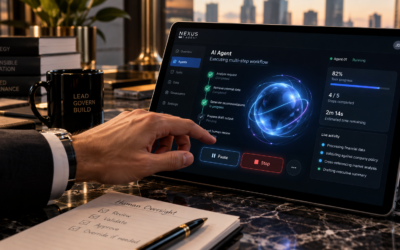
The agent decides, who answers?
One company is approving a pilot of an AI agent that used to only answer questions. Now it sends emails to customers, adjusts inventory, or approves minor payments without anyone checking it line by line. The question that was asked in the room was the same as always:...

How to prevent your data lake from turning into a data swamp: 6 essential controls?
A data lake becomes a data swamp when it accumulates information without cataloging, ownership, quality controls, lineage, permissions, or a lifecycle. To avoid this, six operational controls are required: ownership, metadata, quality by layers, traceability, security, and...

Corporate help desk: how to support employees across multiple locations and hours
A multi-site corporate help desk should centralize attention, but not treat all users equally. It requires coverage by time zone, omnichannel channels, endpoint inventory and context, automation, remote resolution, L1-L3 scaling, and support in...

Managed BCP and DRaaS: what a managed business continuity service covers
Managed BCP maintains an updated, tested, and governed business continuity system; DRaaS protects technological recovery through replication, orchestration, failover, and failback. Together, they connect critical functions with recoverable infrastructure, RTO, and...

Data lake architecture: components, layers, and design decisions
A data lake architecture organizes how a company ingests, stores, transforms, governs, and consumes structured, semi-structured, and unstructured data. Its design should not start with choosing a cloud: it should start with the use cases, sources, and levels of abstraction...
Bronze, Silver and Gold Layers: How a Lakehouse is organized in production
A productive lakehouse separates the data cycle into three layers: Bronze preserves the original data, Silver validates and standardizes it, and Gold turns it into information ready for decision making, BI, and AI. The value lies not in using three colors, but in establishing traceability,...
 Español
 English